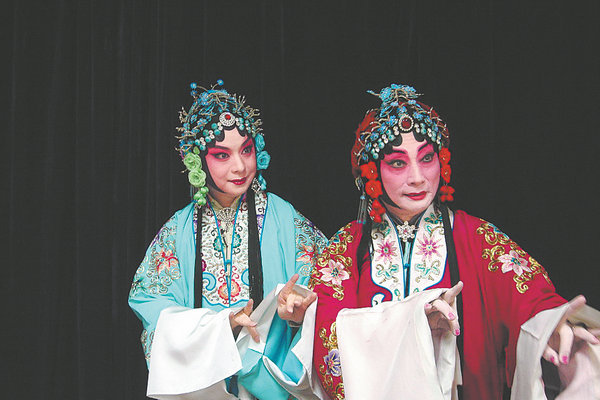
Mei Baojiu
Introduction
Mei Baojiu (1934-2016) was a distinguished Peking Opera performer and the ninth son of the legendary Peking Opera master, Mei Lanfang. As an inheritor of his father's illustrious legacy, Mei Baojiu played a pivotal role in preserving and propagating the Mei School, a performing style characterized by its elegance, emotional depth and intricate portrayal of female characters by male performers, known as nandan.
His contributions to Peking Opera extend beyond his performances; he was committed to modernizing the art form while respecting its traditional roots, ensuring its relevance and appeal to contemporary audiences.
Early Life
Mei Baojiu was born into a family deeply rooted in the arts, especially Peking Opera. Growing up in such an environment, he was naturally inclined towards this traditional Chinese art form. From a young age, he was immersed in the world of Peking Opera, observing and learning from his father, Mei Lanfang, who was one of the most prominent figures in the history of this art form. At the age of 10, Mei Baojiu began his formal training in Peking Opera, following the rigorous training regime that his father endorsed. This early exposure and training laid a solid foundation for Mei Baojiu's later success as a performer, enabling him to master the complex techniques required for nandan roles.
Career
Debut and Rise to Fame
Mei Baojiu made his debut at the age of 13 in Shanghai. His performance was met with acclaim, setting the stage for a promising career. By the time he was 16, he was touring with his father's Peking Opera troupe, performing across various cities in China. This exposure not only honed his craft but also introduced him to a broader audience. After the death of his father in 1961, Mei Baojiu took over as the head of the troupe, a role that further established his position in the Peking Opera world. His stage presence, combined with his ability to convey complex emotions, quickly earned him recognition and respect as a leading nandan performer.
Contribution to Peking Opera
Mei Baojiu’s contributions to Peking Opera were both innovative and preservative. He was dedicated to keeping the essence of the Mei School alive, ensuring that the techniques and styles developed by his father continued to be practiced and appreciated. He was instrumental in reviving classic works such as "Taizhen Waizhuan" (The Anecdotes of Taizhen), which he restaged in a more condensed format to suit modern audiences' preferences. By doing so, he managed to strike a balance between tradition and modernity, attracting new audiences to Peking Opera. In addition to his performances, Mei Baojiu was involved in training young performers, ensuring the transmission of the Mei School's unique techniques and philosophies to the next generation.
Legacy and Influence
Mei Baojiu's legacy is one of dedication to the art of Peking Opera and a commitment to its transmission to future generations. His work in preserving the Mei School's traditions while adapting them for contemporary audiences has left a lasting impact on Peking Opera. The elegance and emotional depth he brought to his performances continue to inspire performers and audiences alike.
Through his efforts, Mei Baojiu ensured that the art of Peking Opera remains a vibrant and integral part of Chinese cultural heritage, celebrated both nationally and internationally. His influence extends beyond his performances; he revitalized interest in Peking Opera and played a crucial role in its continued evolution, ensuring its place in the cultural fabric of China.








